The Strzelecki Track is one of those roads that are part of a stroy. Where as some roads in Australia are simply a way of getting from one place to another.
Running through the remote north-east of South Australia, the Strzelecki has long been one of Australia’s legendary outback routes. Today, travelling it is very different from what it once was, but there’s still something about heading out onto a road like this that gives me that familiar feeling.
The towns disappear behind you. The traffic becomes less frequent. The landscape opens up.
Suddenly you remember just how enormous Australia really is.
There’s Something About an Outback Track
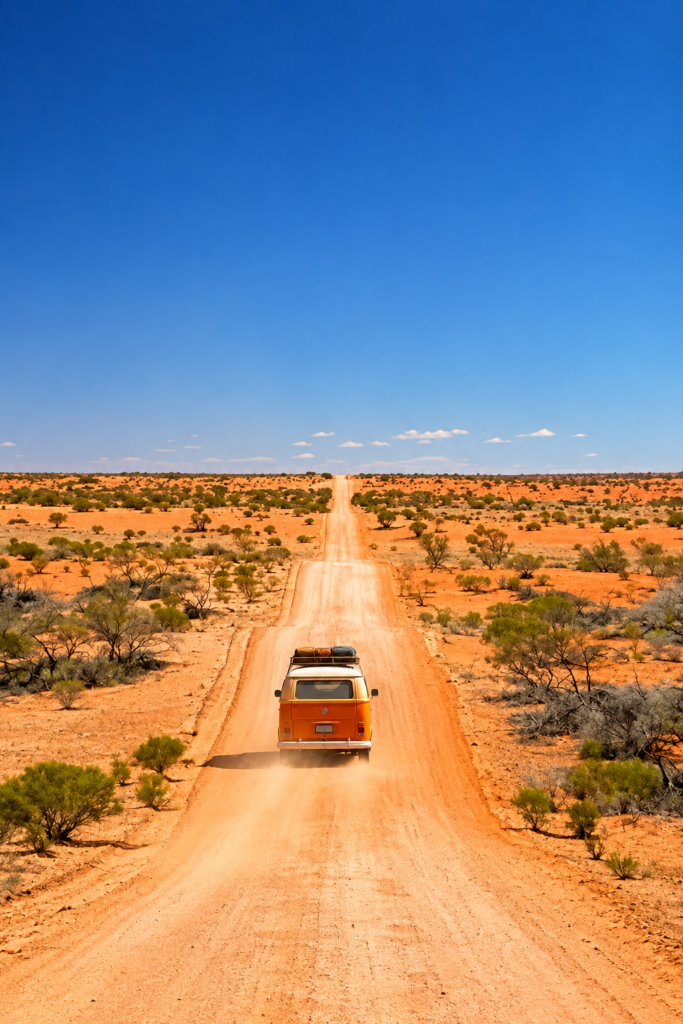
I’ve travelled a lot of Australian roads over the years, and I’ve always loved the point where the bitumen gives way and the country starts to feel a little more remote.
There’s an anticipation that comes with it. You start paying more attention to the road ahead. Fuel matters. Water matters. The weather matters. Distances matter.
You become very aware that out here, you need to respect the country you’re travelling through.
That’s part of the appeal for me. An outback journey asks you to slow down and pay attention.
The Strzelecki Track Is More Than a Road
One of the things I love about travelling through the Australian outback is discovering the history beneath the wheels.
The Strzelecki Track follows country with a remarkable story. Its name comes from explorer Charles Sturt’s naming of Strzelecki Creek after Polish explorer and scientist Sir Paul Edmund de Strzelecki, but the country itself has a history stretching back far beyond European exploration.
Later came pastoralists, stockmen, drovers and travellers. The track is particularly associated with the extraordinary story of Harry Redford, also known as Captain Starlight, who drove cattle through remote country from Queensland towards South Australia in the 1870s.
Then there were the generations of people who worked, lived and travelled through this country when an outback journey required considerably more preparation and uncertainty than it does today.
When you’re travelling the Strzelecki Track, you’re not simply driving across an empty landscape. You’re travelling through layers of Australian history.
It’s the Space I Remember
People who haven’t spent much time in Australia’s inland sometimes ask what there is to see. It’s difficult to explain because often the answer is: Not very much—and that’s exactly the point.
The outback doesn’t need to constantly entertain you.There are huge skies. Long horizons.Dust. Changing light. Birds circling overhead.
The occasional vehicle approaching in the distance. that wonderful moment when you stop the car, turn off the engine and hear…Nothing. Real silence.
It’s something that’s becoming increasingly difficult to find in our modern world.
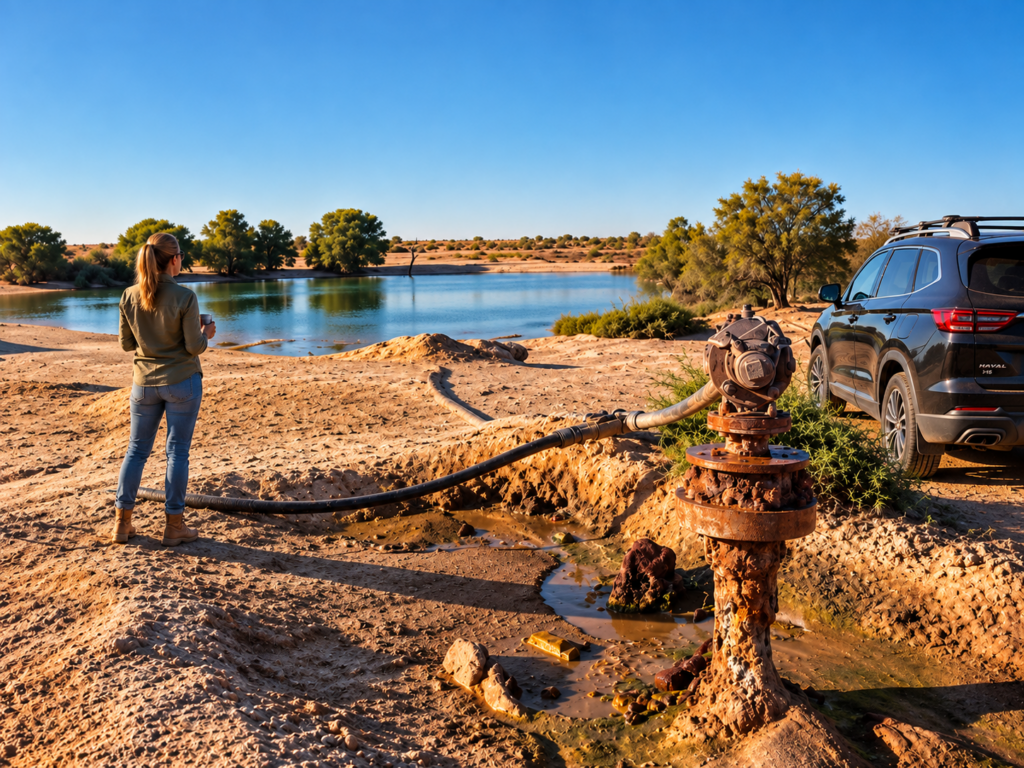
Montecollina Bore is a great camping stop onlong the Strezlecki.
Then Someone Appears
One of the great contradictions of travelling remote Australia is that you can spend hours feeling as though you’re the only person for hundreds of kilometres, then meet someone you’ll remember for years.
That’s always been one of my favourite parts of travelling Australia. The characters. Station owners. Road workers. Truck drivers. Fellow travellers. People behind the bar of an outback pub. Someone pulling up beside you while you’re stopped for a cuppa.
You start talking because that’s what people tend to do out there. Before long, someone is telling you where they’ve come from, where they’re heading or about something you should stop and see further up the road.
Those conversations have always been just as important to me as the destinations.
Travelling the Strzelecki Track Has Changed
This is something I find fascinating about returning to Australia’s great outback roads. They change. Sections improve. Roads are upgraded. (not the Gunbarrel as we recently discovered…lol)
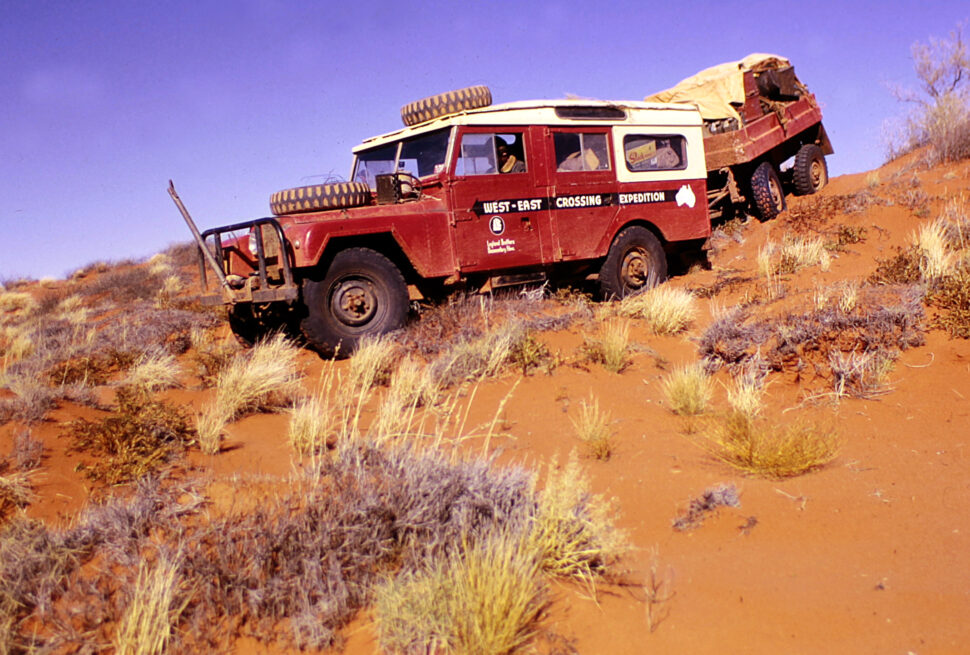
Vehicles become more capable and comfortable, again a blessing on our last trip from West to East. Would not have enjoyed doing the trip as dad did 60 years ago with near to nil comfort, no aircon or refridgeration.
Navigation becomes easier. Couldnt recomment the mini starlink that we took on the trip. We were in the middle of nowhere and because of flooding I was using google to make travel amendments or talking to my son about a doctors appoitment that he had just atteneded.
Satellite communications, detailed weather forecasts and road-condition information available in ways earlier travellers could never have imagined. A journey that was once a serious expedition can eventually become considerably more accessible.
The Outback Teaches You Not to Rush
There is another lesson roads like the Strzelecki Track have taught me.
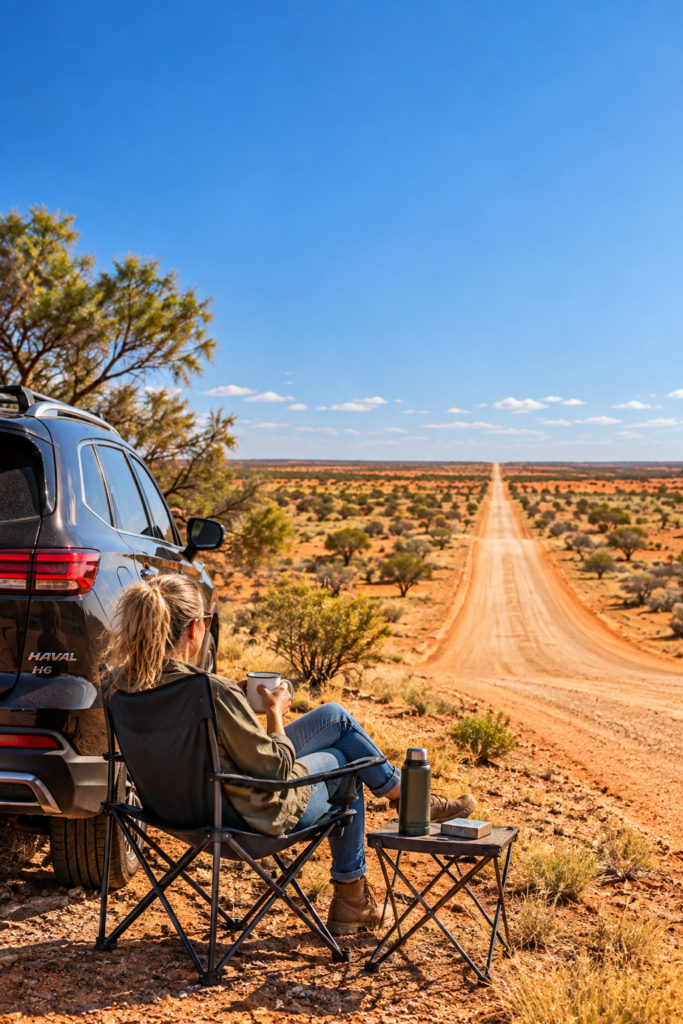
Don’t rush the outback. If your only objective is getting to the other end as quickly as possible, you’ve missed half the reason for being there. Stop. Look around. Read the old signs. Talk to somebody. Make a cup of tea. Watch the light change. Take the photograph but occasionally put the camera down as well.
Some of the memories I’ve carried with me the longest aren’t of major attractions.They’re of ordinary moments in extraordinary places.Standing beside a vehicle with dust on my shoes. Watching a ant drag an insect across the dirt into its hole in the ground.
A cup of tea in my hand. Nothing but country stretching towards the horizon.
Why These Roads Still Matter
Australia is changing. Our vehicles are changing. The way we navigate is changing. Many of the remote roads that once represented enormous adventures are becoming easier to travel.
But I don’t think that makes roads like the Strzelecki Track any less important.
Because their stories remain. The history of how they became are just as important as travelling the road, Every road is a history lesson waiting to be heard.
Every generation experiences them differently. The explorers saw one country. The drovers experienced another.
Families travelling the outback decades ago experienced something different again. Today’s traveller sees the Strzelecki through yet another set of eyes. Perhaps that’s why I still feel drawn to these roads.
I’m interested in what they are today, I’m equally fascinated by what they once were.
And whenever I find myself looking down a long outback road disappearing towards the horizon, the same thought still enters my mind how can I capture that in a photograph?
I wonder what’s around the next bend?
— Carmen Leyland
Leylands Travel Australia