The Leyland Brothers Land Rovers became some of the most recognisable vehicles in Australian television history. But just how reliable were they when Mal and Mike Leyland were travelling through Australia’s remote wilderness?
The stories behind the adventures – with Mal Leyland
By Carmen Leyland | Leylands Travel Australia
There’s something rather special about sitting down with Dad over a cup of coffee and asking him the questions that Australians have been wondering about for decades.
If you grew up watching Ask the Leyland Brothers, you’ll probably remember the questions viewers sent in about travelling Australia, four-wheel driving and the adventures Dad and his brother Mike experienced along the way.
Well, we’re bringing a little of that tradition back with our Coffee with Dad series.
And this week’s question is a beauty!
It comes from Facebook follower Robert Fox, who asked:
“How good or bad were the Land Rovers behind the scenes?”
Were the Leyland Brothers Land Rovers Really Any Good?
Now that’s something I’ve often wondered myself.
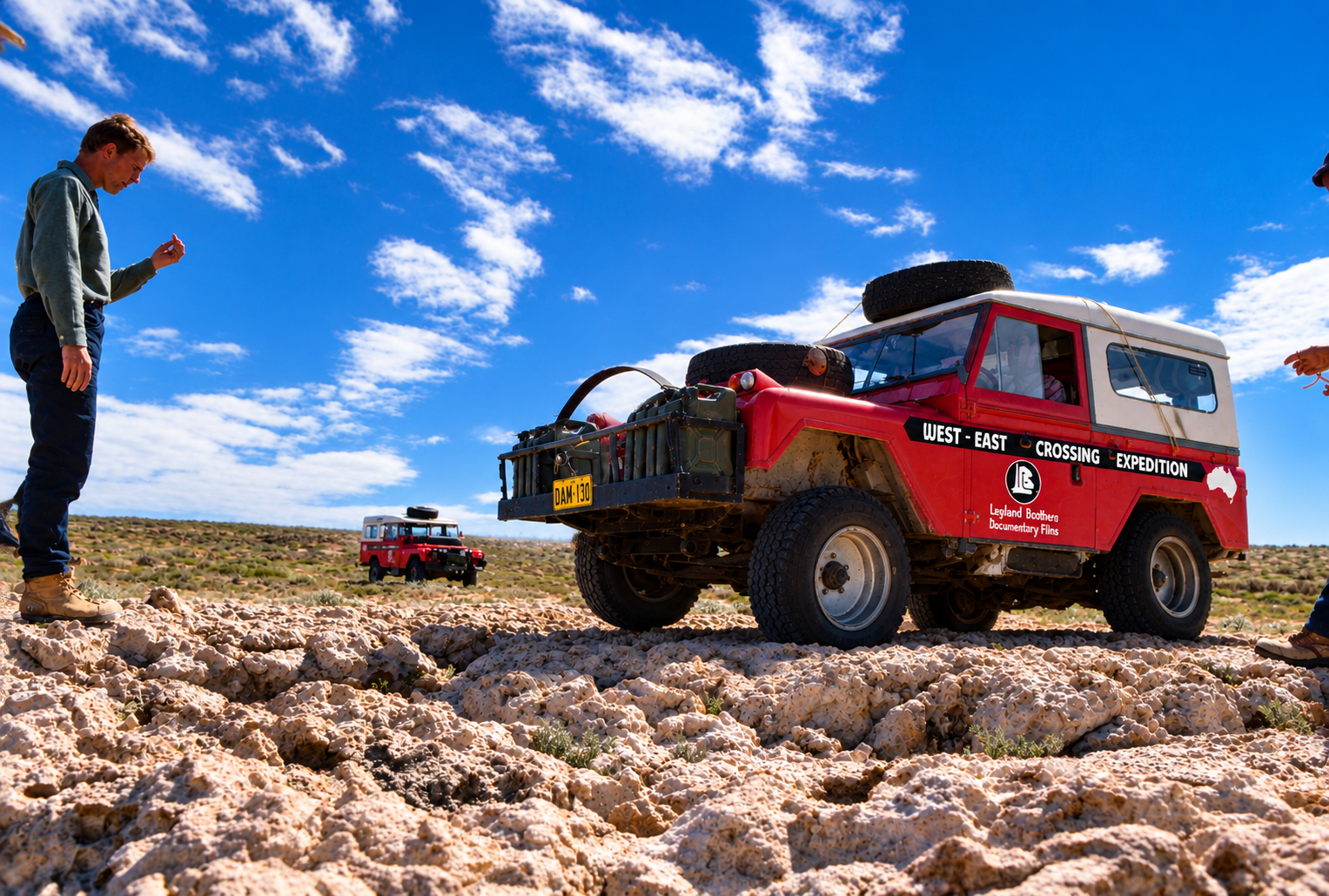
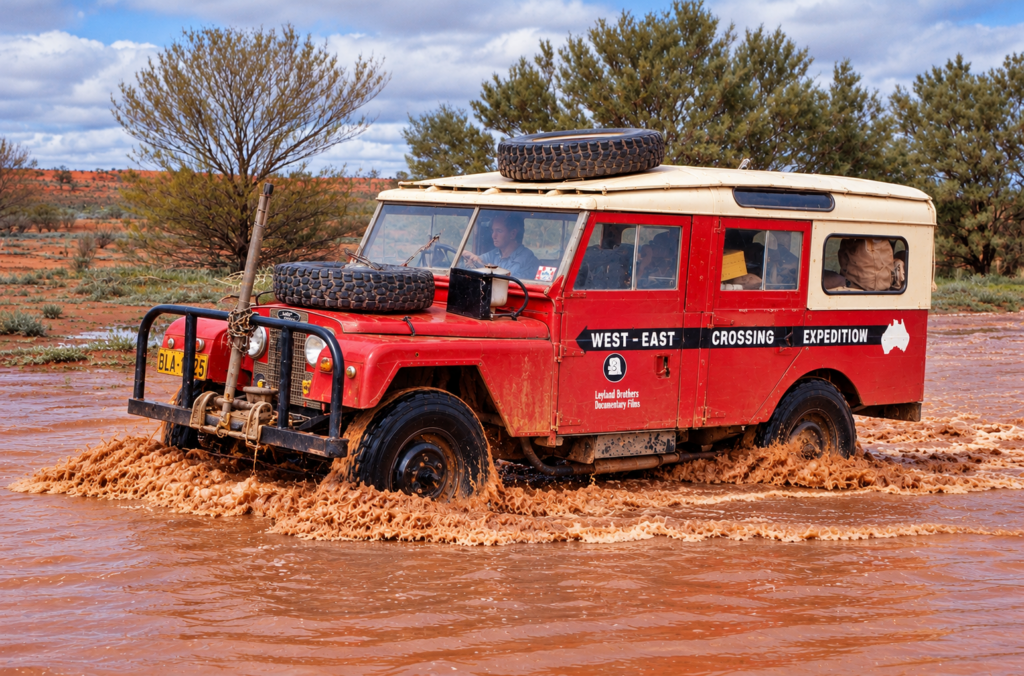
We all remember those famous red Land Rovers crossing deserts, climbing sand dunes and tackling some of the toughest country Australia could throw at them.
But what happened when the cameras weren’t rolling?
Were they really as tough and reliable as they appeared on television?
Or did Dad and Mike spend half their time underneath them with a spanner?
So I decided to ask Dad.
Leyland Brothers Land Rovers: The Biggest Problem? Diffs and Axles!
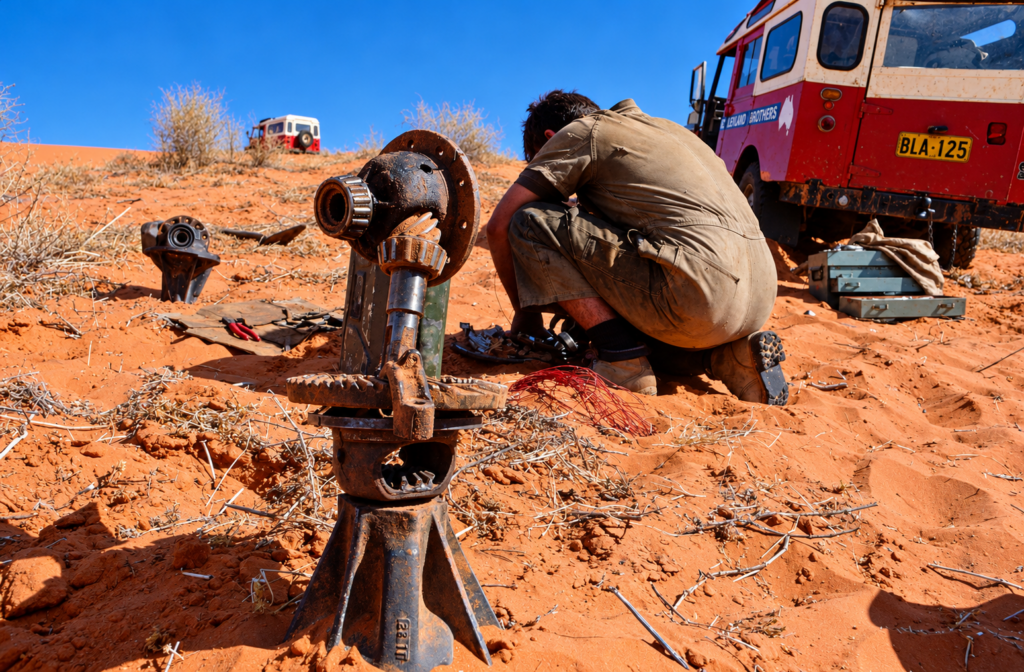
Carmen: “Dad, Robert Fox wants to know how good or bad those old Land Rovers really were. What gave you the most trouble?”
Mal: “The diffs and axles were the biggest issue.”
Well, there you have it!
Not the engines or the bodywork.
It was the differentials and axles that caused the biggest headaches.
And when you think about what those vehicles were being asked to do, it’s hardly surprising.
In 1966, Dad and his brother Mike set out on their extraordinary Wheels Across a Wilderness expedition, travelling across Australia from Steep Point in Western Australia to Cape Byron in New South Wales.
Their vehicles were heavily loaded with the supplies and equipment needed to tackle some of Australia’s most remote country.
They weren’t simply driving along formed roads.
They were negotiating enormous sand dunes, rocky terrain, rough tracks and stretches of wilderness where there were no tracks at all.
The punishment on the vehicles must have been enormous.
How Did the Leyland Brothers Repair Their Land Rovers in the Outback?
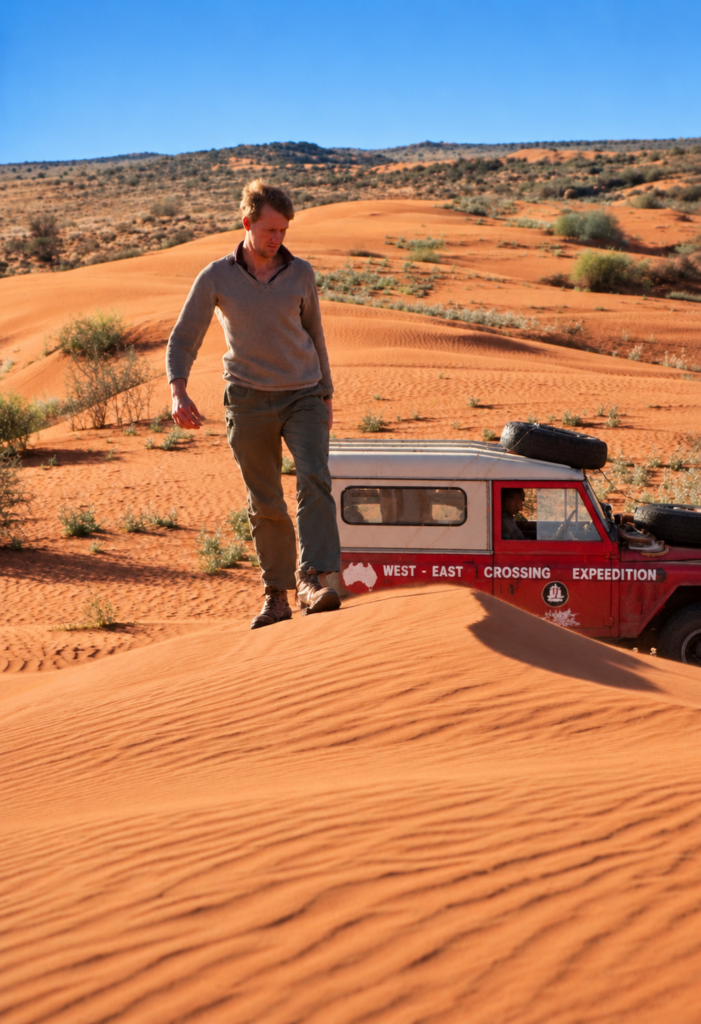
Of course, knowing what broke was only half the story.
I wanted to know how they managed to fix things when they were so far from civilisation.
Carmen: “Dad, when you broke a diff or an axle out in the middle of nowhere, did you carry spare parts, or did you have to improvise repairs?”
Mal: “Both!”
And I think that one little answer says an awful lot about travelling Australia in those days.
They carried spare parts because they knew breakdowns were inevitable.
But no matter how carefully you prepared, you couldn’t possibly carry a replacement for every mechanical component that might fail.
Sometimes you simply had to work with what you had.
A few tools, some spare parts, a bit of mechanical knowledge and a great deal of determination.
Remember, this was 1966.
There were no mobile phones, satellite navigation systems or roadside assistance services waiting to rescue you.
If something broke hundreds of miles from the nearest town, you had to work out how to get moving again.
And that was all part of the adventure.
Two Red Land Rovers and a Dream
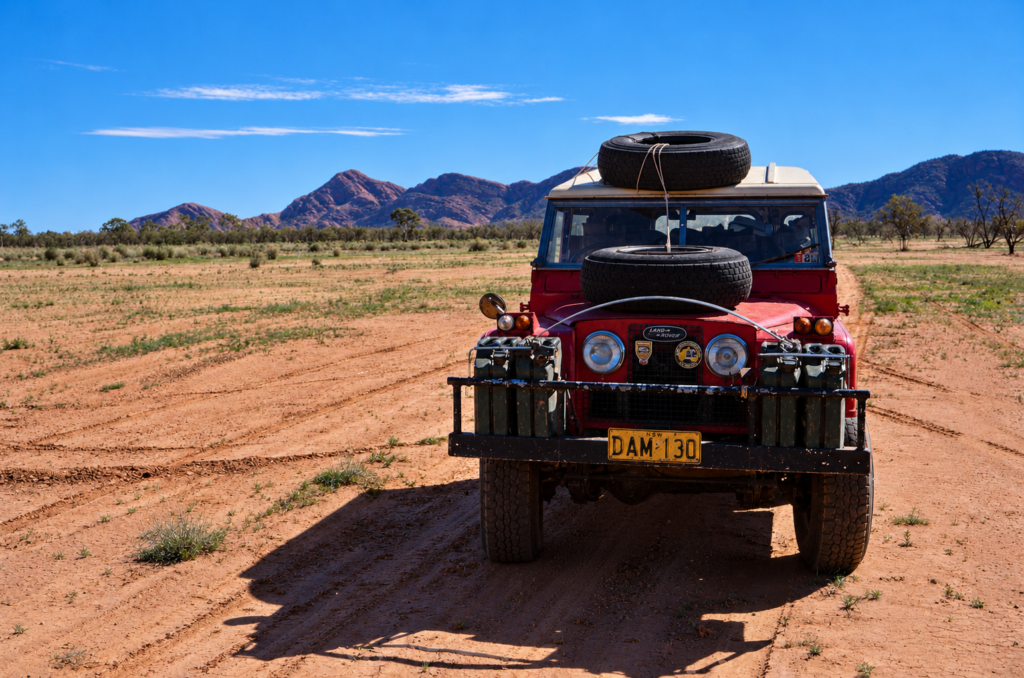
The Leyland Brothers Land Rovers became symbols of Australian adventure, but behind their famous journeys were countless hours of preparation, maintenance and mechanical repairs.
When Dad and Mike began planning Wheels Across a Wilderness, they were attempting something extraordinary.
Their ambition was to cross the Australian continent through its remote interior, travelling from the westernmost point of mainland Australia to its easternmost point.
They used two Land Rovers, including an older Series I station wagon and a short-wheelbase Series vehicle.
Both were prepared for the demanding journey ahead.
The expedition also involved carrying considerable amounts of fuel, water, food, camping equipment and filming gear.
And there was another very important member of the team.
Ted Hayes, their mechanic.
Ted’s mechanical knowledge and ability to help keep the vehicles operating were invaluable.
When you’re travelling through isolated country, a good mechanic can be just as important as a good driver.
Perhaps even more important!
Because no matter how capable your four-wheel drive might be, it’s not much use if you can’t keep it running.
The Leyland Brothers’ Land Rovers Take on the Simpson Desert
The Leyland Brothers Land Rovers faced one of their greatest challenges in the Simpson Desert, where soft sand, steep dunes and heavily loaded vehicles placed enormous strain on their mechanical components.
The team spent 22 days negotiating the desert’s enormous sand ridges.
Imagine that.
Twenty-two days of soft sand, steep dunes, difficult driving and the constant worry of mechanical failure.
Every kilometre had to be earned.
The Land Rovers were heavily loaded, and the strain on their drivetrains was considerable.
Broken differentials and axles weren’t just an inconvenience.
In country that remote, a serious breakdown could become a very dangerous situation.
Water supplies, fuel and food all had to be carefully managed.
And there was no guarantee that another vehicle would come along to help.
It’s easy to sit comfortably at home today and watch those old films, admiring the incredible landscapes and the determination of the young adventurers.
But behind those pictures were long days, mechanical repairs, frustrations and plenty of hard work.
That’s the side of the adventure I find particularly fascinating.
The things that happened when the cameras weren’t rolling.
Were the Land Rovers Really Any Good?
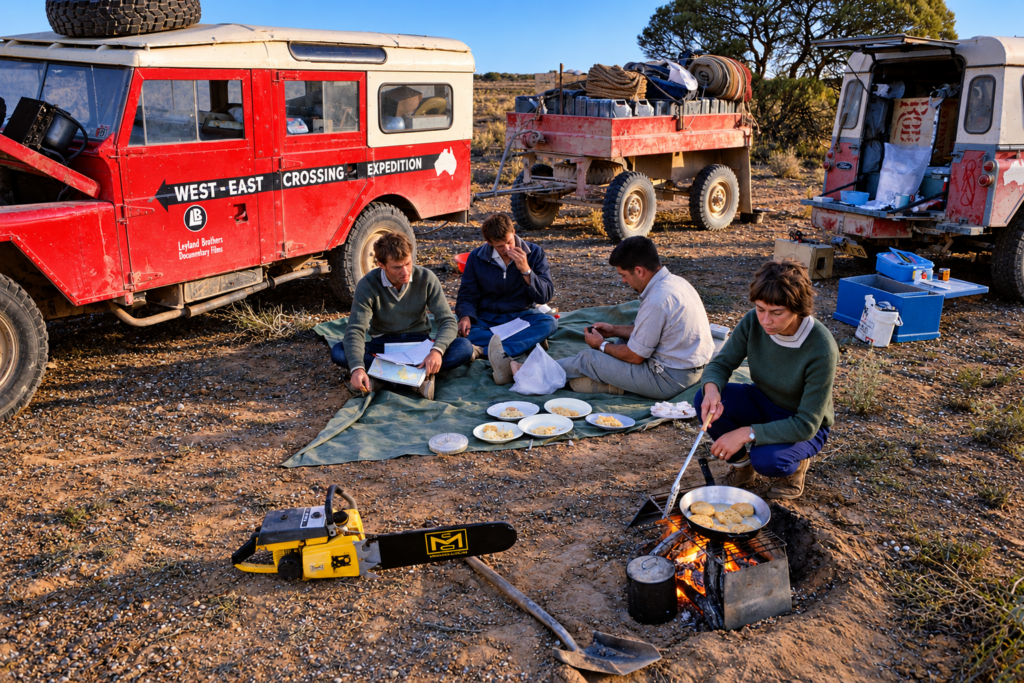
So, after hearing Dad’s answer, what should we make of those old Land Rovers?
Well, I think it’s fair to say they were both remarkably capable and occasionally frustrating!
They were tough, relatively simple vehicles that could be repaired in the field by people who understood how they worked.
But they certainly weren’t indestructible.
And the demanding conditions of the 1966 expedition pushed them well beyond what most ordinary vehicles would ever experience.
The differentials and axles might have been their greatest weakness on that journey, but the vehicles still helped carry the expedition across Australia.
And that, in itself, was quite an achievement.
Of course, it wasn’t simply the vehicles that made the expedition successful.
It was the preparation, the teamwork, the mechanical ingenuity and the determination of everyone involved.
Sometimes, I think that’s what we’ve lost a little of with modern motoring.
Today, our four-wheel drives are packed with technology, electronic systems and equipment that would have seemed extraordinary back in 1966.
But those early explorers relied heavily on their own knowledge and ability to solve problems.
They had to understand their vehicles.
And they had to be prepared for things to go wrong.
From Outback Adventure to Honeymoon: Mal Leyland’s Land Rover Story
And here’s a little piece of Leyland family history that I particularly love.
Three years after Wheels Across a Wilderness, in December 1969, Dad and Mum headed off on their honeymoon.
Their destination?
Lakes Entrance, Victoria.
And their honeymoon vehicle?
One of Dad’s old Land Rovers from the 1966 expedition!
I think that’s rather wonderful.
A vehicle that had crossed some of Australia’s toughest wilderness country was now taking two newlyweds on a very different sort of adventure.
From crossing deserts to beginning married life together.
Some vehicles really do become part of the family.
And that old Land Rover certainly earned its place in Leyland family history.
One of the original Land Rovers from the 1966 Wheels Across a Wilderness expedition is preserved at the National Motor Museum in Birdwood, South Australia. It’s a wonderful piece of Australian motoring and television history, and a reminder of just how extraordinary those early journeys were.
The Leyland Brothers’ Secret to Surviving Australia’s Toughest Outback Adventures
When I think about Dad and Mike’s early expeditions, I don’t just think about the remarkable places they visited.
I think about the courage it took to attempt those journeys with the vehicles and equipment available at the time.
They didn’t have all the answers before setting off.
They knew things could go wrong.
And, as Dad’s answer reminds us, things certainly did.
But they prepared as best they could, carried what they thought they might need and found solutions to problems as they arose.
Perhaps that was the real secret behind the Leyland Brothers’ adventures.
Not that everything went according to plan.
But that they found a way to keep going when it didn’t.
And I think that’s a lesson that still applies to travelling Australia today.
Know your vehicle.
Prepare properly.
Respect the country you’re travelling through.
And never underestimate the importance of a good set of tools!
Thank You, Robert Fox!
Robert, thank you for sending in such a terrific question.
It’s exactly the sort of behind-the-scenes story I love exploring with Dad.
And I’m sure there are plenty more memories about those old Land Rovers that we haven’t uncovered yet.
Now I’d love to hear from you!
Did you ever own an old Series Land Rover?
Were the differentials and axles a problem for you too?
Or perhaps you remember seeing the Leyland Brothers’ famous red Land Rovers travelling around Australia?
Share your stories in the comments.
And if you’ve got a question you’ve always wanted to ask Mal Leyland, send it through.
You never know — it might become the subject of our next Coffee with Dad.
Until next time, happy travels!
Carmen Leyland
Coffee with Dad | Leylands Travel Australia
Keeping the stories, memories and adventures of the Leyland Brothers alive for a new generation.