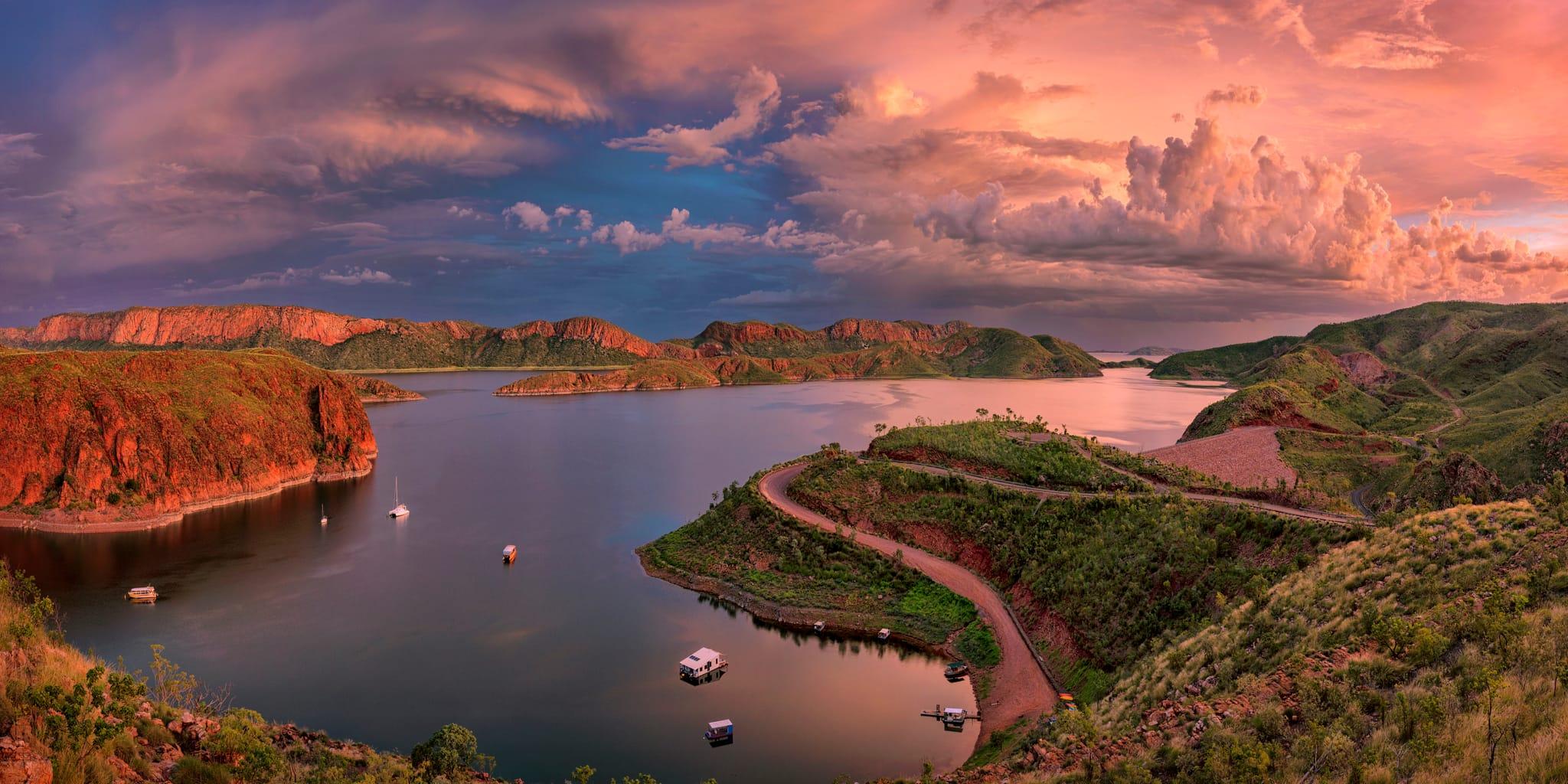
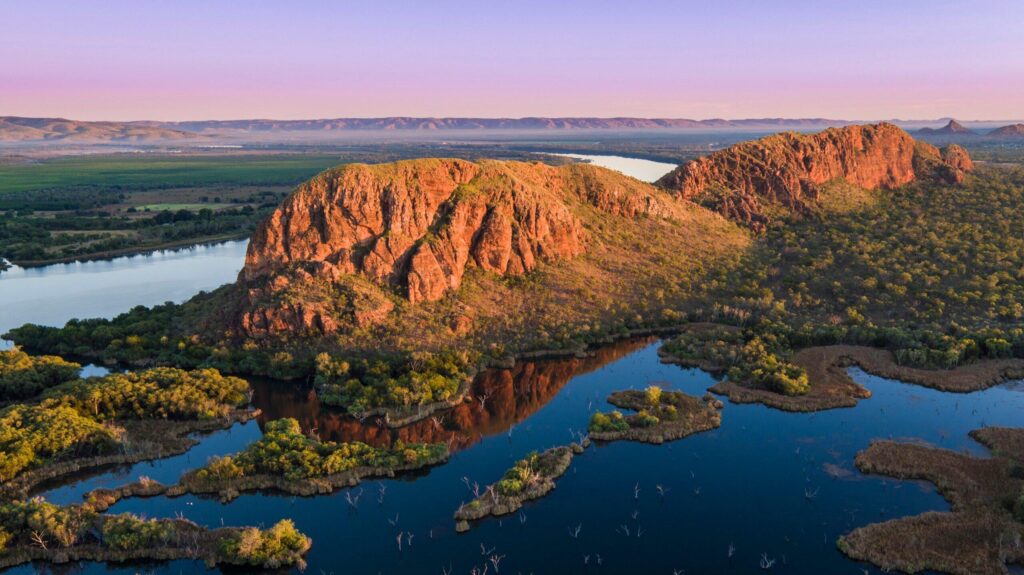
Kununurra Western Australia is one of the Kimberley’s most fascinating destinations, where ancient landscapes, extraordinary engineering and rich cultural history come together. From the magnificent Ord River and Lake Argyle to the spectacular red ranges, this remarkable outback town has a story worth discovering.
The extraordinary history of the Ord River Scheme and why this beautiful corner of Western Australia deserves more than a quick overnight stop.
There’s something remarkable about arriving in Kununurra.
After travelling through the vast, rugged landscapes of the Kimberley, suddenly you find yourself surrounded by water, tropical greenery, cultivated farmland and towering red ranges.
It almost seems impossible.
How did this remote corner of Western Australia become such a productive agricultural region?
The answer is one of Australia’s most ambitious engineering stories, a tale of big dreams, determined pioneers and a mighty river that changed the landscape forever.
But Kununurra’s story began long before the first bulldozers arrived.
Before Kununurra: The Country of the Miriwoong People
For countless generations, the Miriwoong people have lived on and cared for this extraordinary country.
The Ord River, its surrounding wetlands, ranges and plains have deep cultural significance, with knowledge and traditions extending back thousands of years.
Long before modern irrigation channels transformed the landscape, Aboriginal people understood the seasonal rhythms of the river and the rich natural resources of the East Kimberley.
Today, visitors have opportunities to learn about this living cultural heritage through local Aboriginal-guided experiences.
The Big Dream: Turning the Ord River into Farmland
The development of Kununurra Western Australia became one of the country’s most ambitious agricultural projects, transforming the surrounding landscape through the Ord River Irrigation Scheme.
In the early twentieth century, people began asking an ambitious question.
Could the enormous wet-season flows of the Ord River be harnessed to create a major agricultural region in Australia’s remote northwest?
The idea gathered momentum during the 1940s, when experimental farming began along the river.
There were enormous challenges. The climate was harsh, the distances were vast, and growing crops in tropical conditions brought unexpected difficulties.
Yet the dream continued.
By the late 1950s, work was underway on what would become the Ord River Irrigation Scheme.
A new town was needed to house the workers, engineers, farming families and businesses supporting the project.
And so, in 1961, Kununurra officially came into existence.
Imagine arriving here in those early days.
A small new town surrounded by rugged country, with enormous construction projects underway and the promise of a very different future.
The Dam That Changed Everything
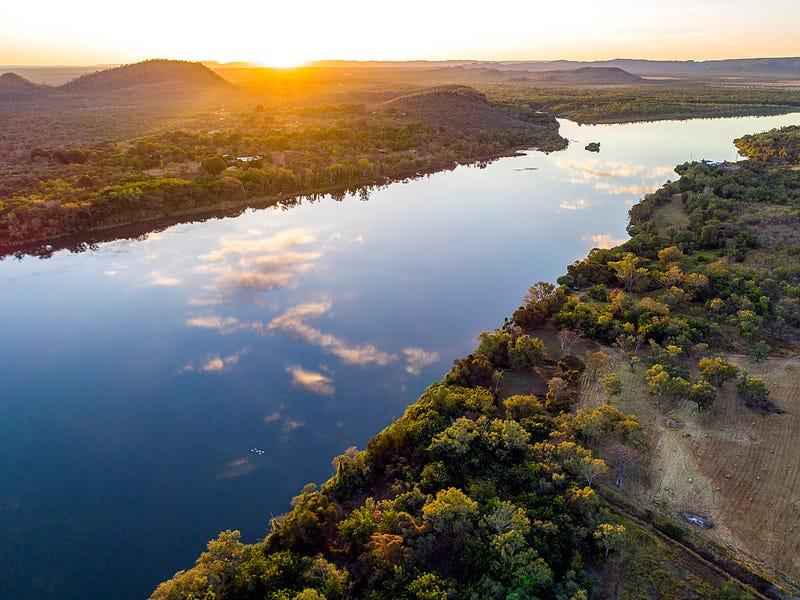
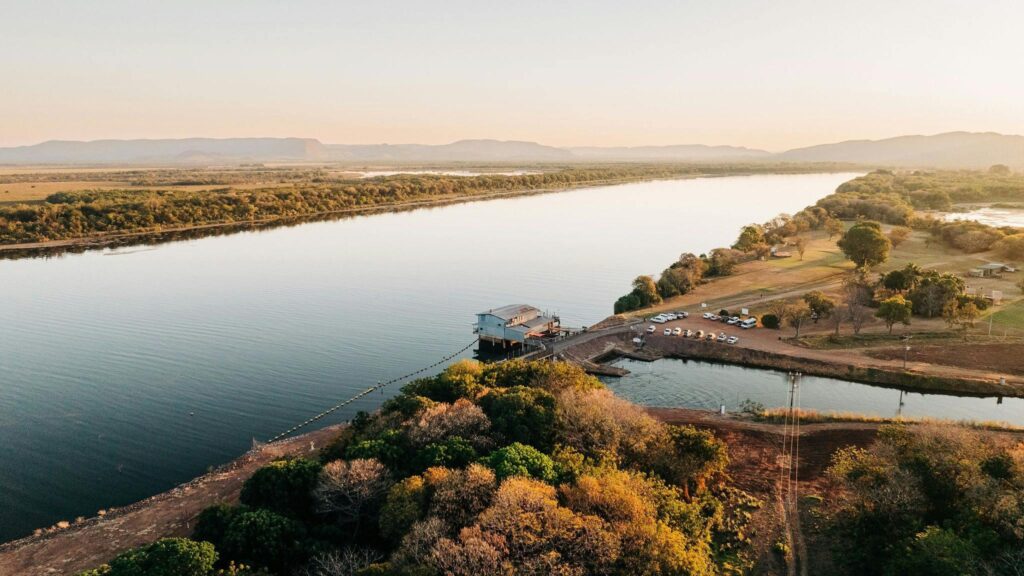
In 1963, the Ord River Diversion Dam was officially opened, creating Lake Kununurra and providing water for the first stage of the irrigation scheme.
But the really enormous undertaking was still to come.
Further upstream, construction of the Ord River Dam created Lake Argyle, which filled during the early 1970s.
The scale of the project was extraordinary.
An enormous body of freshwater appeared among the ancient Kimberley ranges, providing water storage for agriculture and changing the surrounding environment.
The irrigation scheme brought new opportunities, but it also had profound consequences for Aboriginal communities, including the loss of and changes to traditional lands.
The history of Kununurra is therefore both a story of remarkable engineering and a reminder that large developments can affect people and Country in very different ways.
Today, the result is one of Australia’s most distinctive outback towns, where tropical agriculture, dramatic scenery and ancient cultural heritage sit side by side.
7 Wonderful Things to See and Do in Kununurra Western Australia
Exploring Kununurra Western Australia offers visitors a wonderful combination of Kimberley history, spectacular natural scenery, river cruises and unforgettable outback experiences.
1. Cruise the Magnificent Ord River
If there’s one experience I’d put near the top of the list, it’s a cruise along the Ord River.
Imagine travelling through spectacular gorges, with red cliffs rising above the water and birdlife gathering along the banks.
The contrast between the green river corridor and the rugged Kimberley landscape is extraordinary.
2. Discover Lake Argyle
Lake Argyle is almost impossible to appreciate until you see it.
Surrounded by ranges and stretching towards the horizon, this enormous freshwater lake is one of the East Kimberley’s great attractions.
Take a scenic cruise, enjoy the lookouts or simply sit and admire the landscape.
A sunset cruise would be a particularly memorable way to experience it.
3. Explore Mirima National Park
Just outside town, Mirima National Park is sometimes described as the mini Bungle Bungles.
Its striking red sandstone formations, walking trails and viewpoints make it an excellent place to explore the Kimberley’s geology without travelling far from Kununurra.
Early morning is a lovely time to visit, before the heat builds.
4. Visit Ivanhoe Crossing
One of Kununurra’s most photographed landmarks, Ivanhoe Crossing is a curved concrete causeway across the Ord River.
It has been part of the district’s transport history for decades.
Today it’s a popular sightseeing and photography stop. Don’t attempt to drive across unless local authorities confirm it’s open and safe.
5. Watch the Sunset from Kelly’s Knob
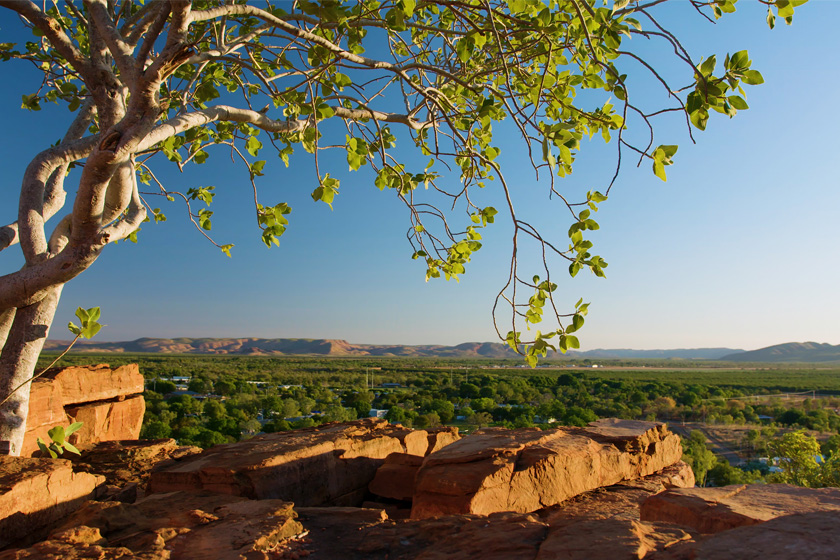
For beautiful views across Kununurra, the surrounding farmland and distant ranges, head to Kelly’s Knob.
Late afternoon is especially lovely as the changing light brings out the colours of the landscape.
6. Take a Scenic Flight Over the Kimberley
Kununurra is a wonderful base for scenic flights over some of Australia’s most dramatic landscapes.
Depending on the flight you choose, you might see Lake Argyle, the Ord River or the remarkable striped sandstone domes of the Bungle Bungle Range in Purnululu National Park.
It’s a completely different perspective on the Kimberley.
7. Discover the History Behind the Town
Take time to visit the Ord River Diversion Dam and learn about the irrigation scheme.
The old pumping station, now known as the PumpHouse, is another fascinating reminder of Kununurra’s beginnings.
And if you’re interested in the wider pastoral history of the region, consider visiting the Argyle Homestead Museum near Lake Argyle.
How Long Should You Stay in Kununurra?
I would allow at least four nights, preferably five.
That gives you time to enjoy an Ord River cruise, explore Lake Argyle, visit the local lookouts and national park, and perhaps take a scenic flight.
If you’re planning a longer Kimberley adventure, Kununurra also makes a wonderful base for exploring further afield.
The dry season, generally May to September, is a popular time to visit, with more comfortable conditions for sightseeing. Always check road access and tour availability, particularly around the wet season.
For more information about local attractions, tours and planning your visit, explore the Kununurra Visitor Centre.
Why Kununurra Is Worth the Journey
What I love about places like Kununurra is that there’s always more to the story than what you see from the road.
Behind the beautiful scenery is a fascinating history of people, ambition, engineering, hardship and change.
It’s the sort of place that reminds us why travelling Australia is so rewarding.
You don’t just discover a destination.
You discover the stories that made it.
Have you visited Kununurra or travelled through the East Kimberley? I’d love to hear your memories, especially if you remember the town in its earlier days.
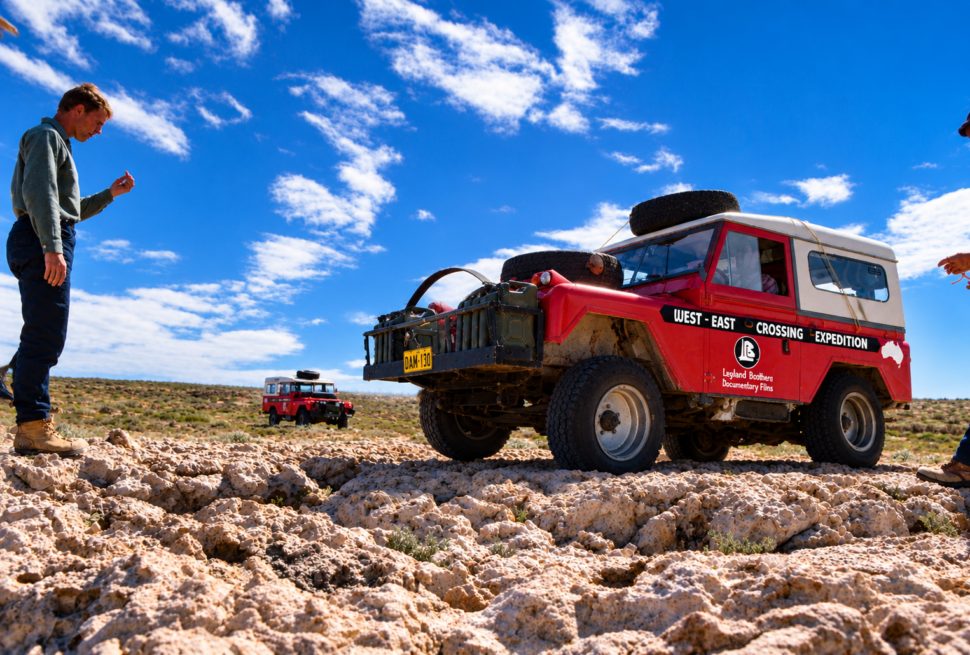
The Kimberley has always been one of Australia’s great adventure destinations. If you enjoy stories about exploring remote Australia, you might also enjoy our Wheels Across a Wilderness story, looking back at one of the Leyland Brothers’ remarkable journeys.
Keep exploring Australia.
Carmen Leyland
Leylands Travel Australia