By Carmen Leyland | Leylands Travel Australia
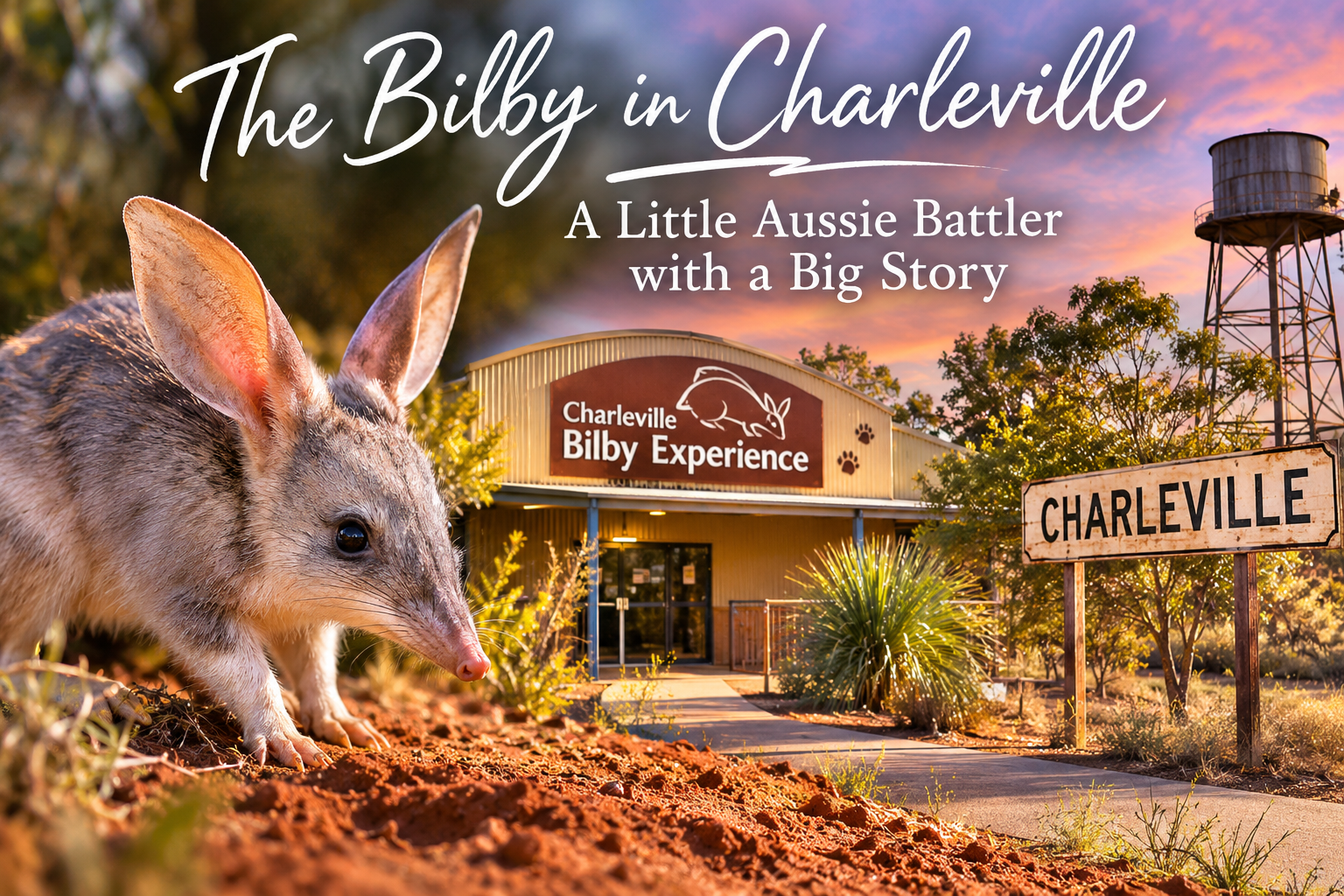
The Charleville Bilby Experience is one of the places I’m particularly excited about visiting on our new Queensland Outback Explorer tour.
I’ve been spending quite a bit of time lately finalising the itinerary, checking our stops and thinking about all the wonderful experiences we’ll be sharing with our guests. And as I was working through our visit to Charleville, I found myself thinking about one of Australia’s most fascinating little creatures — the bilby.
It’s such an extraordinary Australian animal, and yet I wonder how many of us really know much about it.
We’ve all heard of the Easter Bilby, and most of us would recognise those enormous ears and that adorable little face. But behind those big ears is a remarkable story of survival, hardship and the determination of some very dedicated Australians to save a species from disappearing forever.
And that story has a very special connection to the Queensland outback town of Charleville.
Meet the Bilby – One of Australia’s Most Remarkable Little Animals
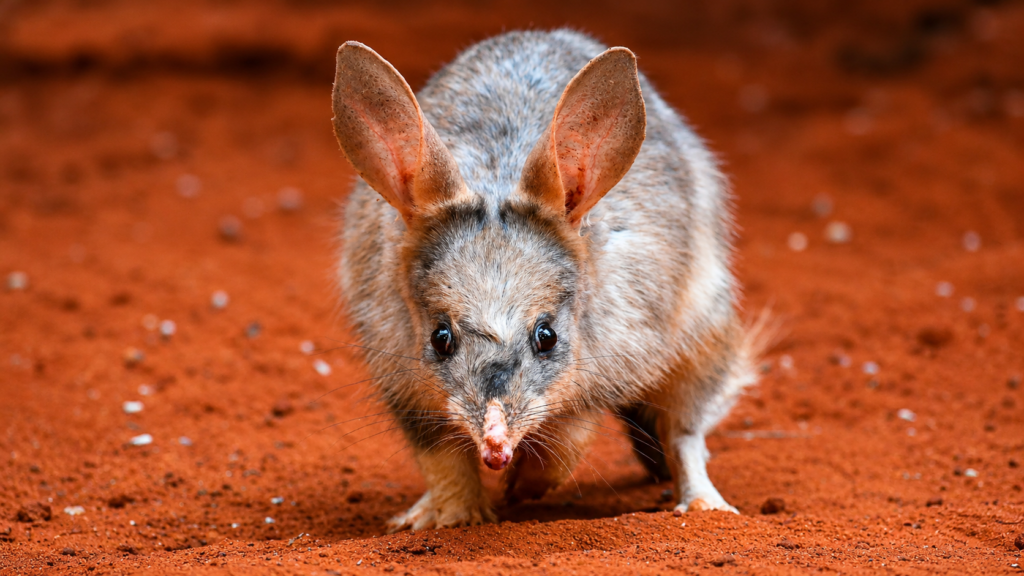
The greater bilby is a small, nocturnal marsupial found in Australia’s arid and semi-arid regions.
With its long, silky blue-grey fur, enormous rabbit-like ears, pointed snout and distinctive black-and-white tail, it’s certainly one of our more unusual-looking native animals.
But those enormous ears aren’t just for show!
They help the bilby detect predators and prey, while also assisting with regulating body temperature in the harsh Australian climate.
Bilbies are extraordinary diggers, too. With strong front claws, they construct spiralling burrows that can extend several metres underground. These burrows provide protection from predators and relief from the scorching heat of the day.
And here’s something I find particularly fascinating: bilbies are actually little ecosystem engineers.
As they dig and forage for insects, seeds, bulbs and other food, they turn over the soil, helping water penetrate the ground and creating opportunities for plants to grow.
In other words, these little creatures play a much bigger role in the Australian landscape than their size might suggest.
Once Common Across Australia – Now Fighting for Survival
There was a time when bilbies were found across much of mainland Australia.
In fact, Australia once had two species: the greater bilby and the lesser bilby.
Sadly, the lesser bilby is now extinct.
The greater bilby has survived, but its range has contracted dramatically.
The arrival of introduced predators, particularly foxes and feral cats, has been devastating. Competition and habitat changes associated with introduced rabbits, livestock and other pressures have also contributed to the bilby’s decline.
Imagine an animal that once occupied vast areas of our continent, now surviving in a fraction of its former range.
It’s a sobering thought.
And it’s one of the reasons I believe places like the Bilby Experience in Charleville are so important.

Charleville – A Town with a Heart for the Bilby
Charleville sits on the banks of the Warrego River in southwest Queensland, approximately 750 kilometres west of Brisbane.
It’s a town with a rich outback history, fascinating characters and plenty of stories to tell.
Charleville developed as an important pastoral and transport centre, and over the years has become known for its connections to aviation, outback communications, the night sky and, of course, the bilby.
It’s the sort of town I love exploring.
You might arrive thinking it’s simply another stop along the highway, but spend a little time there and you soon discover there’s much more to the place.
One of Charleville’s most important modern stories is its involvement in the effort to protect the greater bilby.
The Charleville Bilby Experience – Giving the Bilby a Future
The Charleville Bilby Experience introduces visitors to these elusive little animals and the conservation work being undertaken to help secure their future.
Because bilbies are nocturnal and naturally shy, most Australians will never have the opportunity to see one in the wild.
That’s what makes a visit here so special.
Visitors can learn about the bilby’s behaviour, its habitat, the threats it faces and the efforts being made to protect the species.
The Save the Bilby Fund, established in 1999, has played a significant role in bilby conservation, including supporting predator-free habitat and breeding and recovery efforts.
One of the most important conservation initiatives associated with the organisation is the predator-proof sanctuary at Currawinya National Park in southwest Queensland, where bilbies can be protected from introduced predators.
The work is about much more than simply keeping a few animals safe.
It’s about helping restore a native species to landscapes where it once belonged, improving our understanding of its needs and giving future generations the chance to know that the bilby is more than just a picture in a wildlife book.
And I think that’s something worth supporting.
The Easter Bilby – An Australian Tradition with a Purpose
Of course, we can’t talk about bilbies without mentioning the Easter Bilby!
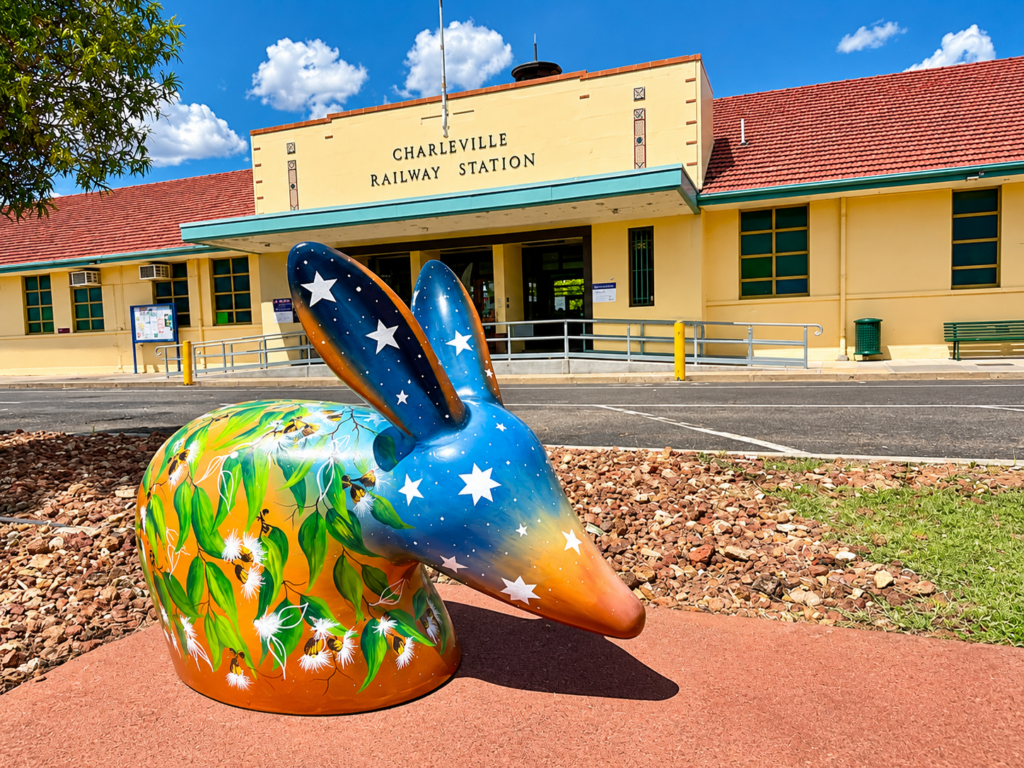
For generations, Australian children have grown up with the Easter Bunny. But the idea of an Easter Bilby offers something rather special: an opportunity to celebrate one of our own native animals while raising awareness about its conservation.
It’s a lovely concept.
Rather than celebrating an introduced rabbit — an animal that has caused enormous environmental damage across Australia — the Easter Bilby encourages us to think about protecting a native species.
Over the years, chocolate Easter Bilbies and conservation campaigns have helped bring this little animal into the national spotlight.
And while a chocolate bilby might be delicious, seeing a real one and understanding its story is something quite different.
There’s So Much More to Discover in Charleville
While the bilby is one of the reasons we’re visiting Charleville on our Queensland Outback Explorer tour, it’s certainly not the town’s only attraction.
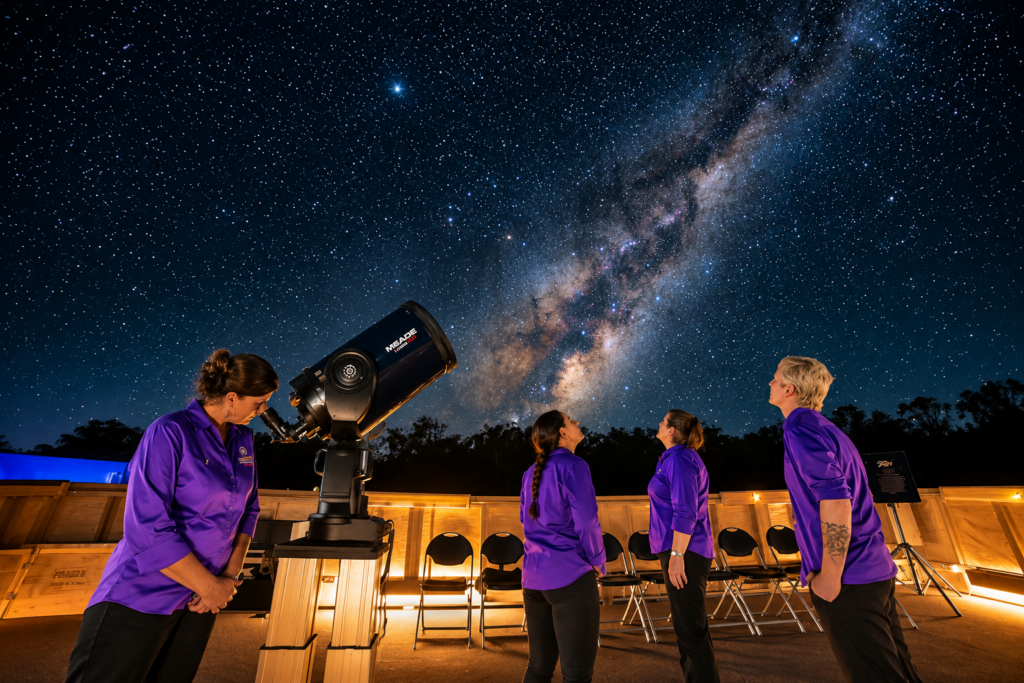
Charleville is home to the Cosmos Centre, where visitors can discover the wonders of the night sky, taking advantage of the spectacularly dark skies of the outback.
There’s also the fascinating story of the Royal Flying Doctor Service and the important role aviation and communications have played in connecting remote communities.
Then there’s the town’s wartime history, including its connection to American military operations during the Second World War.
And, as with so many Queensland outback towns, some of the best experiences come from simply wandering around, chatting with locals and discovering the stories that don’t always make it into the guidebooks.
It’s these stories that make travelling through the Australian outback so rewarding.
Why I’ve Included the Bilby Experience in Our Queensland Outback Explorer Tour
When I put together a tour, I don’t just think about the places we’re going to visit.
I think about the stories behind those places.
What makes them special? What can we learn? Who are the people making a difference? And what experiences will our guests remember long after they’ve returned home?
The bilby story ticks all those boxes.
It’s a story of Australia’s natural heritage, of the changes our environment has experienced, and of the people who refuse to give up on protecting something precious.
And perhaps that’s what I love most about travelling.
You can visit a town like Charleville and discover that one of the biggest stories is about one of Australia’s smallest and most vulnerable animals.

Come and Discover the Queensland Outback with Me
I’m really looking forward to sharing Charleville and the Bilby Experience with our guests on our new Queensland Outback Explorer tour.
We’ll be exploring some wonderful outback destinations, discovering local history, meeting interesting people and experiencing the landscapes and stories that make Queensland such a special place.
And along the way, we’ll be learning about a little Australian battler with enormous ears and an even bigger story.
I hope you’ll come along and discover it with me.
Carmen Leyland
Leylands Travel Australia
Explore our Queensland Outback Explorer tour:
View our tours